Bled

Bled

Saturday, 15 March 2014

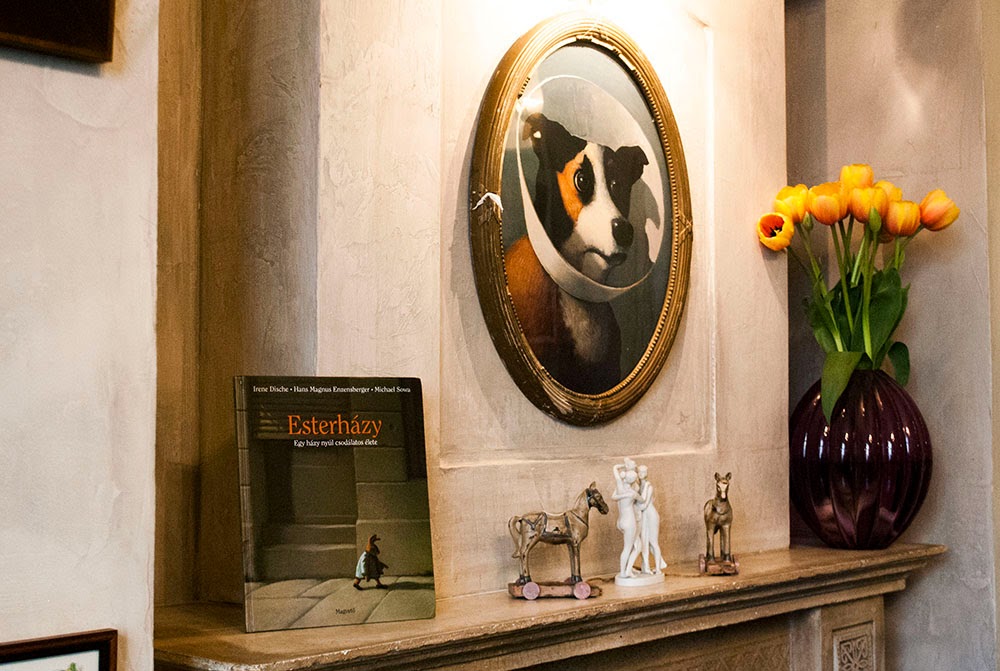
The Colour Orange


So I decided to expand my flower inventory. Here come the buttercups.


Wednesday, 12 March 2014

The Square of Roses


There are no roses here, or at least not in such early spring, but upon closer inspection, I did identify some twigs that might grow into fine roses come summer. But that should surprise no one, as the name of the square was actually chosen on account of roses being associated to Saint Elizabeth, whose statue can be seen in front of the church. Before becoming the square of the roses, it had some what less poetic names, such as Cattle Market square and Poorhouse square. These days there’s nothing dramatic happening in the area though, on a lazy weekend afternoon it’s mainly a crowd of people walking dogs, kids chasing said dogs and people reading and occasionally eyeing said children and dogs with a slightly accusative but benign stare.


Sea Captains Don't Like Crew Cuts

Although I wonder what the sexy bums have to do with it, but a tearable pun is always a good way to make you chuckle randomly while waiting for the tram so strangers question your already questionable sanity.


Tuesday, 11 March 2014

Start of a Season


Today was the first day of the new season when you could really enjoy your drink/meal outside, so the whole city rushed to any terraces that were already available- Kálvin square was no different, especially after being shut out from the city's lounging bloodstream for several years due to the fourth metro line being insistently built in the area. 


Searching for Soup

For  the past couple of years everyone in town has been eating either soup or pasta or both. Ever since the first and now classic soup joint has opened close to Kálvin, long queues of mainly hipsters can be spotted in random locations patiently waiting for the miraculous liquid and eating it mosly al fresco, irrespective of the weather outside. A nice little cuppa organic tomato soup while it’s hailing with frogs? Why not. I am usually a bit reticent when it comes to another one of the same crop of places, as by my experience most do not live up to the standards, I guess I’m a bit of a reverse Soup nazi of sorts.

Souper Pasta does however have a few strong arguments on its side. The most important being, of course, that both the soups and pasta are good. Just good might sound like an understatement, but it is not, on the contrary: on a market saturated with yellowish liquids with random stuff floating around, good soup becomes a Holy Grail. And so does take away pasta that is not overcooked. The choices in Souper are more varied than in most places and they do not compromise on the ingredients: each bit of sheep cheese and ham pasta is properly enveloped in a nice thick layer of cheese, just as it should be. And they’ve tried to pay attention to the non food side too, with some interesting quotes (was Beethoven actually concerned by soup?!) and two actual sitting areas both on top and under the (tiny) shop itself. 


Saturday, 8 March 2014

Sleepy Island in the Sun: Ráckeve


So I finally snapped into action regarding my let’s check where the other HÉVs are going plan and took H6 to its final stop in Ráckeve, some 30 kilometres south of Budapest’s city limits, on Csepel Island.

First things first, after more than ten years of living here, it finally dawned on me that the terminus of this line is not on Boráros tér, but out in the wilderness of Közvágóhíd. Then I tried to get a grip with the fact that everyone seemed so sleepy-  the lady at the ticket counter would fumble endlessly, slowly, calmly with each kind of order she got. I dare not imagine what would happen if they put her behind the counter in a fast food restaurant and you barked several things at her within a few seconds- most likely a mental short circuit. Every passenger on the train was half dozing off, every stop was enveloped in a dreamy bright haze-and, to add to the surreal of the situation, the ticket inspector was positively friendly and sported a broad smile.

Once in Ráckeve we kind of did what you are supposed to do in small Eastern European towns you’ve never been to before- follow the belltower. Of which they have several in Ráckeve- the most famous one was built in the 15th century by the Serbian community which settled in the area after being displaced from their original homes south of the Danube by the Turks.

The church is still in use, but, as the charming little old lady who acts as guide informed us, there’s only eight Serbians left in town, one of them being the priest himself. This reminded me of the Finno-ugrian speaking Livian minority of Latvia, who had a constant  headcount of eight throughout my studies as  a Finnish major- even more worryingly, they’d been eight forever, as the textbooks from the 70s mentioned the same number too. So eight might be the holy number of disappearing communities.

Once you’ve done the round of the old Serbian church, you can inspect a slightly ruined smallish castle which used to belong to Eugene of Savoy’s family, the banks of the Danube (with some ducks and two evil looking swans for entertainment) and two other churches. On a Saturday afternoon basically no stores are open, though as a general rule it seems that the town abunds in doctors and lawyers but doesn’t do so well on the market and restaurant front. The one we did manage to locate close to the centre was very pleasant though, with good food and friendly staff-though totally empty at 3 pm. Ráckeve does seem like one of those towns where no one really eats lunch out, the first patrons started trickling in only after 5.

Six was a perfect time to get back through the sleep-warp into the city, though we did finally identify one lively spot in Ráckeve’s landscape: the local tobacco and betting store was alive with the clutter of pens predicting Sunday’s games and lottery numbers.


Thursday, 6 March 2014

Little March


 A Mărţişor is a little trinket with a red-and-white ribbon given as a spring greeting gift in the early days of March. Bulgarians have a similar tradition- but they only have the ribbon part, which is missing out on hal f the fun, really. Said objects come in many shapes and sizes, from the classical little metal horsehoes, chimney sweeps and four leaf clovers to hand made paper or ceramic figues. And of course a lot of plastic horrors all the way from China, where this craft is, and everything else, very traditional. Each year the main street of my hometown fills up with armies of vendors displaying their mărţişoare alongside snowdrops, hyacinths and daffodils. which means a thorough inspection is due to investigate what’s an offer this season.