Bled

Bled

Monday, 20 June 2016

Berlin Photo Diary- Part One

Since the Internet is awash with factual and practical travel advice about Berlin, I decided it would be pointless to add another spoonful of water to the sea, so I went for a strictly personal diary of photos and impressions which can hopefully still come in handy should someone feel a devastating urge to visit Berlin. (It's a very correct urge and it should therefore be followed.)

Booking accommodation in cities you don't know, especially last minute, is always a bit tricky. What you think is central might not be quite so, then there are some central neighbourhoods which might not necessarily be your dream destination-looking good on the map is one, looking good in real life, quite another thing. In Berlin we got lucky though, Moabit, albeit the former home of a prison with pretty bad rep from Nazi times, is absolutely enjoyable and close to the centre even by foot, though in the long run it's probably best to take the U-bahn.

Berlin is very green, and pretty proud to be so. I couldn't help but think that there are other ways of running a city than covering it with shiny slabs of super functional concrete, a new found hobby of Budapest's city fathers. It was a total joy to meet an absolutely real, though admittedly brown, rabbit pottering around Tiergarten, whose speed sadly eluded my camera.

I'm usually more than suspicious when it comes to visiting the seats of power and administration, but just as one has to give in to the Houses of Parliament, there's no avoiding the Reichstag. Which is again one of those things for which the Germans have their own super descriptive expression, which no one else can master, much less divide into syllables, to the smugness of natives. So here it goes:  Deutscher Bundestag - Plenarbereich Reichstagsgebäude.

I've said it before, I'll say it again: no city is the real deal for me if it doesn't have either a proper river, or a proper sea. For a long while Berlin seemed suspicious, because the Spree didn't feel proper enough on the river front, being a mere tributary of the Havel, which is the tributary of the Elbe, and yes only the Elbe is finally the proper river. Seeing it personally has however convinced me of the charms of the Spree, and I am sure the Spree is now deeply relieved to have received a pass as a river worthy of a real city. Totally incidentally, travelling by train allowed us to hurtle through the valley of the Elbe at the German-Czech border and conclude that it's totally spectacular. 

It's fair to say that you'll bump into the remnants of the Wall pretty quickly no matter in which area of the city you are. And it's a sobering bump- each time I saw it, I had this nagging thought of how humanity is just insane, like really INSANE, with really capital letters. Why build a wall among people and have them die trying to cross it when you can happily cycle to Copenhagen instead. 

Forgive me if I'll keep comparing Berlin to Budapest, I guess we all do that when travelling, measure the new place to the one we live in, and see how they fare. Well Berlin fares better at the what's written on walls and lampposts- I have of course not had the time to scrutinize it quite as I do with Budapest, but the incidence of offensive messages is much lower and that of thought provoking ones definitely higher.

When the essential truths of life hit you in the solar plexus: Unter den Linden is actually under lindens. Also, the Brits call the tree lime, because, why the hell not. Or maybe because they can confuse everyone else since lime trees most definitely do not have anything to do with lime fruit. There you go, useless lexical wandering of the day. Which however led me to discover that Budapest fares better than Berlin at wi-fi connections- many coffeehouses and bars did not have them at all, or offered a measly fifteen minutes or so of traffic, which is really nothing when you have to unlock the mysteries of English vocabulary and such. Yes, I know- read a book, and read a book I did, whereupon my guide graciously informed me that the Adlon was the hotel where Michael Jackson dangled poor Blanket out of the window. 

A friend of mine who happens to travel a lot by boat told me that her ultimate dream is to sit at the bow one day and cruise through the breeze, like Jack and Rose do in Titanic. (She is less convinced about the impending arrival of the iceberg, though.) Which in turn made me think that what I would like to do most is stand on the Brandenburger Tor next to the Quadriga, like angels in Der Himmel über Berlin- I hereby again protest against the English title of Wings of Desire. Because the sky over Berlin is a wondrous thing- it has that slight Northern touch about it which makes it bluer and crisper. So I'd have really nothing to complain about if I could stare into that every now and then, with the side perks of being eternal and all that. 

The more I walked around Berlin the more it dawned on me how much I knew about it from films and literature. Though of course the literature part is a bit thwarted by my German being of the wurst and knödel ordering variety, just one of the many defeats I inflicted upon myself in the course of my short existence. I did however succeed in the rather art college kid endeavour of watching Fassbinder's Berlin Alexanderplatz in one go, but that was with the help of like minded people, who nudged you into wakefulness when drifting off and narrated the bits you missed when on a bathroom break. Since the original novel has, by all accounts, a pretty shabby English translation, I might as well sign off now and go figure out my der, die, das-es. 

The central part of the city is under pretty intensive re-building and prettifying, which will, I am sure, benefit the inhabitants of Berlin in the long run, but was just a little bit unwelcome when providing sonic backdrop akin to a fighter jet taking off to my morning coffee.

Much as I like Rome, my overall experience can be summed up as about fifty churches too many for my taste. Berlin mercifully has less, the Dome is big and bulky, I gave it a side glance and then prodded off towards the much more interesting Fernsehturm. That's the TV tower, but allow me to wallow in the few German words I can spell off the top of my head. 

Berliners didn't strike me as weather hysterical, in the good tradition of their Scandinavian and Dutch relatives. 22 degrees with a chance of rain calls for a light raincoat at the most, not the entire Eastern European arsenal of two cardigans, a rain coat, a thicker coat shoved in your bag to make it bulky and break your shoulders, spare socks, wellingtons and a little scarf just in case. 

Trivia you find when your Internet is fast and furious: Berlin Verlag is the German publishing house of both Péter Esterházy and Péter Nádas, and also of Nobel prize winners Nadine Gordimer and Elfriede Jelinek. Their building also sports this pretty sign which spins around, thus causing you to block traffic waiting for Berlin to turn into the right spot and mildly anger Berliners (because Berliners are actually people and not donuts) who actually have meaningful things to do with their day.

Case in point, the young gentleman is probably headed to a specialty coffee shop for a cascara. Also of note, the traffic light with the Ampelmännchen, the typical East German symbol, which differs from the classical ones in West Germany and most of Europe in that it wears a hat. After reunification, attempts were made to standardize traffic lights all over Germany, but people wanted their old guy back, and back they did have him in most areas.

Berlin has candy cotton coloured houses (just like Vienna) and wild flowers spontaneously deciding to grow here and there. 

It's well obvious that you are in the Eastern part of Berlin when you see such a bonanza of cables. Communist states just loved their cables which ran in an insane and senseless zig zag all over cities and villages. I still remember being slightly worried about Finland's functionality when upon visiting it I noticed how they hardly have cables compared to what I was used to. Also, the ones they have actually serve a purpose, but that's another story.

It took me a good week or so to notice that one of the murals on Kazinczy street had been re-painted- being in a familiar environment often leads to slacking, of the body and mind. So when I travel I always walk to exhaustion and try to look at everything, the details of buildings, the faces of people, the things they do differently. It's a phyisical and mental workout that I love- though it has the downside that once back in the old haunts I am sort of hungover and dissatisfied with the old, less demanding environment. 

Since Berlin is the second city I visit during rose season- and rose season is great because it lasts longer than most other flowers, I came to the super scientific conclusion that whereas Belgrade favours a peachey-orangey coloured rose, Berlin often comes up with this pastel pink. Also, Budapest roses tend to be blood red.

Volkspark Friedrichshain was gingerly recommended as a popular gay cruising area by our guide, though it looked decidedly more demure in the midday sun. I also marked it mentally as a spot where one could do a bit of jogging, though maybe not in the later hours, so as to avoid uncomfortable run-ins.

The park also gives home to the Märchenbrunnen, of which I just saw a snowed upon picture which awoke an urge to visit the city in winter. Returning to our fountain, it is decorated with the statues of fairy tale characters, some of them looking odd, to say the least, raising within me general questions about the enjoyability of most sculpture, on the one side, and the intense quirkiness of German taste, on the other.

With the risk of being lambasted by purists- I am not a big fan of German beer. I suspect that, albeit it was a great idea to being with, the Reinheitsgebot (the beer purity law) also has the effect of making most German beers absolutely similar, and in my opinion absolutely average. I have often enjoyed German beer as a pleasant companion to food, or a sunny day, but never have I been in love with a German beer. The situation is totally different with pretzels. If there is heaven, it also includes pretzels of two varieties: the traditional Romanian sort and the German one doused with lye. The establishment where the unknown staple food of Valhalla was consumed was the buffet version of the Schönbrunn restaurant, which was warmly recommended as excellent, though sadly, I was unable to try their food. Because pretzels.
It dawned on me that I really like the idea of tram tracks with vegetation in between. I just made a mental note of that, and of also loving the word flâneur, or should I say flâneuse, because women often get left out of such lofty ideas. And then it also dawned on me that the original iteration of my wandering aimlessly around happened to have taken place in a city with vegetation between the tram tracks.

I love side streets, especially the ones which are popular with locals, but less so with tourists. And I particularly love them at off hours, early morning, when you meet the insomniacs, dog walkers and dead beat party animals, or midday, when they are deserted and you hear the incessant rattle of crockery and the unified smells of many dinners envelop you.

A good side street gets even better when there is a restaurant populated with regulars- I'm even happy to have an indefinite all local language menu and a waiter taken aback by the arrival of aliens. I'm also of the unorthodox view that German cuisine is great, because dumplings and cabbage make me happy in a way no foie gras ever will.


They drew the line of the Wall on Bernauer strasse and divided people's homes. It seems so utterly ridiculous, looking at people casually strolling by, bikes, cars rushing through the afternoon traffic. People once died here because they wanted to cross the street, and we have learned nothing, and still think that building walls is a solution.

Free is probably a different word to someone who still felt the shadow of communism. I was lucky enough not to be stunted by it, the way my parents' generation sadly was, but I'm probably part of the last generation who retains an inkling of what it was like to be trapped in the delusion of crazed leaders. I remember how my heart fluttered the first time I crossed from Hungary to Austria without stopping at the border, and it makes me immensely sad to see one of the best things of a unified Europe being brought into question again. 

We think there's nothing more straightforward than going round the block with your mate for a beer, a smoke, a chat. We take our freedom for granted. We mustn't.

One of the ugliest things I've ever seen. But pieces of it should be left there, and hopefully they will mean something to at least a few of those visiting them. Though judging by the number of grinning selfies on street corners where people landed to their death, we're doomed. 

One of my earliest, and strangely fondest, childhood memories is perusing German 'fashion magazines'. Don't think in terms of Vogue and Elle, these were actually the mail order catalogues of mid-market retail chains, such as Otto or Neckerman, with the occasional excitement of an actual IKEA catalogue. The decadent pieces were smuggled into the country by those having the sublime privilege of occasionally travelling abroad, and were then worn thin by being passed around and used by seamstresses to create a semblance of Western fashion in the drab land of Romania. I was particularly struck by all the strange knick-knacks, statuettes, gnomes, colourful pots and other varied receptacles, plastic flowers and the likes which seemed to be means for these strange, alien, ideal people, the Germans, to decorate their gardens and balconies. I am happy to inform you that some things never change. This time around there is also a unifying theme in the Nationalelf's EURO participation, which, quietly but resolutely, is expected to go all the way, Jogi Löw's pant antics notwithstanding. 

Worst advice in Berlin. Or provocation. Or just random French text, like the long lost scribble from the now defunct underground passage at Margit island, declaring that the writer loves French fries and your mum's boobs. 
      

Wednesday, 8 June 2016

Wednesday Pleasures- More Names for Sziget 2016

The last bigger Sziget line up announcement has just landed, and as the weather gets ever hotter and nicer, and hopefully less stormy (though what is Sziget without a major soak), the thought has to sink in: it’s festival season, time to dig out onesies, wellingtons and flowery headbands- all apply to both genders and to all Szitizens in between.

But before all that, let’s see what is on offer when it comes to newly announced names. Editors are back, and they will be playing A38, which is double great. They have of course been to Budapest in December, and those who occasionally end up on this blog might remember the raving review we gave them, alongside the raving review we gave to their Sziget set back in 2013, so yes, it’s likely we’ll be raving come August too. And although they were brilliant in the later afternoon-early evening slot on the Main Stage as well, a proper evening slot on the A38 stage suits them better. Our extensive Editors track record has also brought us to the pleasant position of being able to illustrate this post with their shots exclusively.

Mind you- there might be some shots of The Chemical Brothers on record too, but raiding the archives is not necessarily the easiest thing to do on a Wednesday morning. Suffice to say, the Brothers are back and that’s great news, because as we’ve mentioned it before, we kind of miss electronic music with something meaningful to say. Or, better put, we needed to believe in something. Also, their last record, Born in the Echoes, an impressive eight, was a definite return to that kind of form which makes them one of the most relevant bands in the history of dance music. And there are very few things more exciting than a great band reinventing itself while also staying fundamentally the same.

Another empty slot on the Main Stage was filled with Tinie Tempah, and while we might not be the biggest fiends of this genre, British rappers such as Dizzee Rascal have generally been super enjoyable so we’re looking forward to the chapter Tinie can add to this story.

Alongside Editors, the OTP Bank A38 stage will also welcome BOY- naturally a Swiss-German duo of girls. We did the youtube raid on them, and it turned up a twee video shot in Barcelona, reminding us of the splendid time we had sipping mojitos in a Cuban bar in Raval and roaming on the Barceloneta beach wrapped in the flag of one of the local teams, we’ll leave the wild guess of which up to you. The video also contains pigeons! The music itself is perfect H&M background music, inducing urges of buying that flowery top because you never know when you’ll need it to sip mojitos in.

BØRNS we like out of sheer concept of having an ø in his stage name (he’s real name is actually Garret Borns), which makes the number of people spelling their name with ø suddenly spike to double on the island. (The other one being MØ of course.) In case Sziget wants to focus on people who involve quirky Scandinavian letters in their name, we can recommend the lovely Låpsley (Holly Lapsley Fletcher) who makes ridiculously great electro at the ridiculous age of 19. Also we might reconsider naming the blog Pøcket Diåry Buðapest.

Other names added to the A38 line up include Wiwek, Snails, Maduk ft. MC Mota, Noisia 'Outer Edges' and Kasra whom we will give the youtube treatment prior to the festival, as discovering new names is always great fun, while Jay Hardway, Volt&State, Fedde Le Grand, D-Wayne, Tujamo and Laidback Luke, playing in the Telekom Party Arena will be left to those whose cup of tea, or more likely can of energy drink, they are.


Sunday, 5 June 2016

Beasts of the Southern Wild

My great chagrin about Western European cities is that they have no cats. Well, they do, they must have some, but their cats are not fully fledged members of the polis, they do not wander around in that self assured way of a feline basking in the knowledge that she owns- the house, the garden, the street, whatever place she might find herself in. The Mediterranean has such cats- small Greek villages greet you with scrawny furry ears peaking out from behind whitewashed walls, in Istanbul’s backstreet stores you randomly find a sleeping cat-dragon ensconced in the basket you were about to buy and in Rome’s Piazza Argentina they perform the superhuman and superfeline task of outnumbering Asian tourists.

Western cities on the other hand have dogs aplenty. Small dogs looking like evil alien species from a distant Star Trek world tucked into minute Swarowski crystal bedecked bags, pugs on the border of asphyxia, giant drooly things peering sadly into the nowhere, angry poodles about to bite unsuspecting ankles, Yorkshire terriers on the edge of paralysis through hysteria waiting outside corner shops, hipster hounds inhaling the fumes of specialty coffee.

Enter the city which has both- and it’s Belgrade, obviously, always on the verge of escaping definition, always at a confluence. At first glance, you’d say it’s a dog city akin to Budapest, with early mornings punctuated by the comings and goings of dog owners taking the mutt out for some fresh air, usually looking a little worse for wear and in need of a cup of something to shake them into definite wakefulness. (In case you wondered, this can apply to both dog and owner.) But stay a little longer, and you’ll start meeting the cats of Belgrade. There’s definitely less of them than more to the south, but this makes them that more dignified, even the decidedly stray ones are well fed and comfortable with their bit of the circus of life. There’s coffeehouse cats, and beer bar cats, and black cats casually crossing the street just because they can.

There are also beasts of an altogether different kind roaming the streets of Belgrade: old cars, often proud products of a forward looking communist economy, sometimes in top shape, with shiny bonnets and carefully re-upholstered seats, sometimes looking like they’ve taken one to one thousand trips too many on bumpy country roads.

The sight of a Dacia 1310, especially one which has been lovingly maintained, is becoming a rarity in Romania, where nostalgia about the ’golden era’ of communism is much more ambiguous. In Serbia, however, the state of Yugoslavia and of being in Yugoslavia is often regarded as something positive, a better time before the 90s, a period of new found stability for other countries in the region, took a tragic toll on the country, or what was left of it.


Thursday, 2 June 2016

Food and Other Glorious Aspects- Belgrade Guide Part Four

There comes a point in your life when you stare into the abyss, and the abyss stares back, smiles, and says hello. More precisely in our case, amidst a refreshing spring shower, it said zdravo. Or so it seemed to me, as I was very focused on it, on its shiny frothy blackness reflecting the last rays of the sun hiding under clouds- my abyss was the mother of all Turkish coffees. 

Or domaća kafa, as it is called around this part of the world- homemade coffee, but also coffee from home, without any particular nationality stuck to it, such dances with terms and fire are particularly popular in the area of the former Yugoslavia, where not really knowing what to call it, people will refer to the language as naš jezik- our language, the group engulfed by 'our' to be defined at a later stage, or possibly never, as to avoid unnecessary hassle. 

Coffee is of course not only an abyss, but a general Balkan turbulence: each summer I spend particularly entertaining moments listening to Turks and Greeks bicker over what to call it- the Turks might have the advantage, as basically the whole area (but the Greeks) calls it Turkish coffee, so besides calling it domaća, you can also get away with calling it turska kafa in Serbia as well. 

The specimen which started this whole sociocultural rambling was sampled in the Krunska ulica outpost of the Coffeedream chain and, in its whole intense half-litre splendour induced a state which could best be defined in Vinnie Jones’ words: it was emotional. As per our ulterior investigation, Turkish coffee is often served in giant portions in Belgrade, yet I tend to be partial to the more classical iteration, which fills a small espresso cup- two great places to sample it are the Znak Pitanja restaurant on Kralja Petra street and Srpska Kafana on Svetogorska.

Srpska Kafana shouldn’t be your destination just for coffee- it’s a generally charming old affair, with the classical red-white checked table cloths, patrons who seem to be languishing in a dark corner at least since Vuk Karadžić’s linguistic reform and will casually go for beer and brandy for breakfast, extremely friendly staff (albeit with a completely minimal inkling of English, so be prepared for a polite sign language conversation around the subject of eggs if you speak no Serbian, or, alternatively take a crash course prior to travelling) , an esoteric all-Cyrillic website, and, above all, Srećko the house cat. I seem to have forgotten the food- which is very silly of me, because the food is also pretty amazing.

Should you be too in touch with your inner (or outer )hipster, there are also specialty coffee shops aplenty- in Užitak we were welcomed by a professional but pretty strict lady who took offence at my unorthodox consumption of very light roast Honduran beans as espresso- the coffee was however great and the location on Hilandarska street is perfect to take your poison of choice away to Tašmajdan park- I can’t really find reasons against my living is Belgrade except maybe that I would constantly tend towards zero productivity, as I’d be in Tašmajdan reading and having coffee. 

Other spots worth checking out for caffeination purposes are Aviator Coffee- of which there are two, one on Gundulićev venac and one on Cara Nikolaja, and Zona Industriale on Njegoševa street. Should you wish to be on a very sober budget in Belgrade, there are plenty of small stores with fresh countryside produce, one of which brought me to the existential truth that Serbia is to the south of Hungary and thus fruit is riper in mid-May. 

I am pretty great at observations like these-just recently, I noticed how, whereas I might run into obstacles in what concerns particularly obscure lexical aspects touching on birds, fish or vegetables, my Serbian vocabulary is flawless when it comes to fruit. Now I love my peaches and melons as much as the next woman, but the real reason behind this forte is that, quite similarly to their northern and north-eastern neighbours, Serbs are also the kind of people who will waste no chances in turning pretty much any kind of imaginable fruit into brandy. (The best kind of people, really, but I admit to being absolutely biased on this one.)The age old classic is of course plum brandy, šljivovica, yet if I were to choose the one type which Serbia excels at in particular, I would go for the more fragrant quince version, dunjevača. Most restaurants serve pretty good, often home made brandies, but for a more intensive study of this fascinating and relevant topic, Rakia Bar is a superb option.

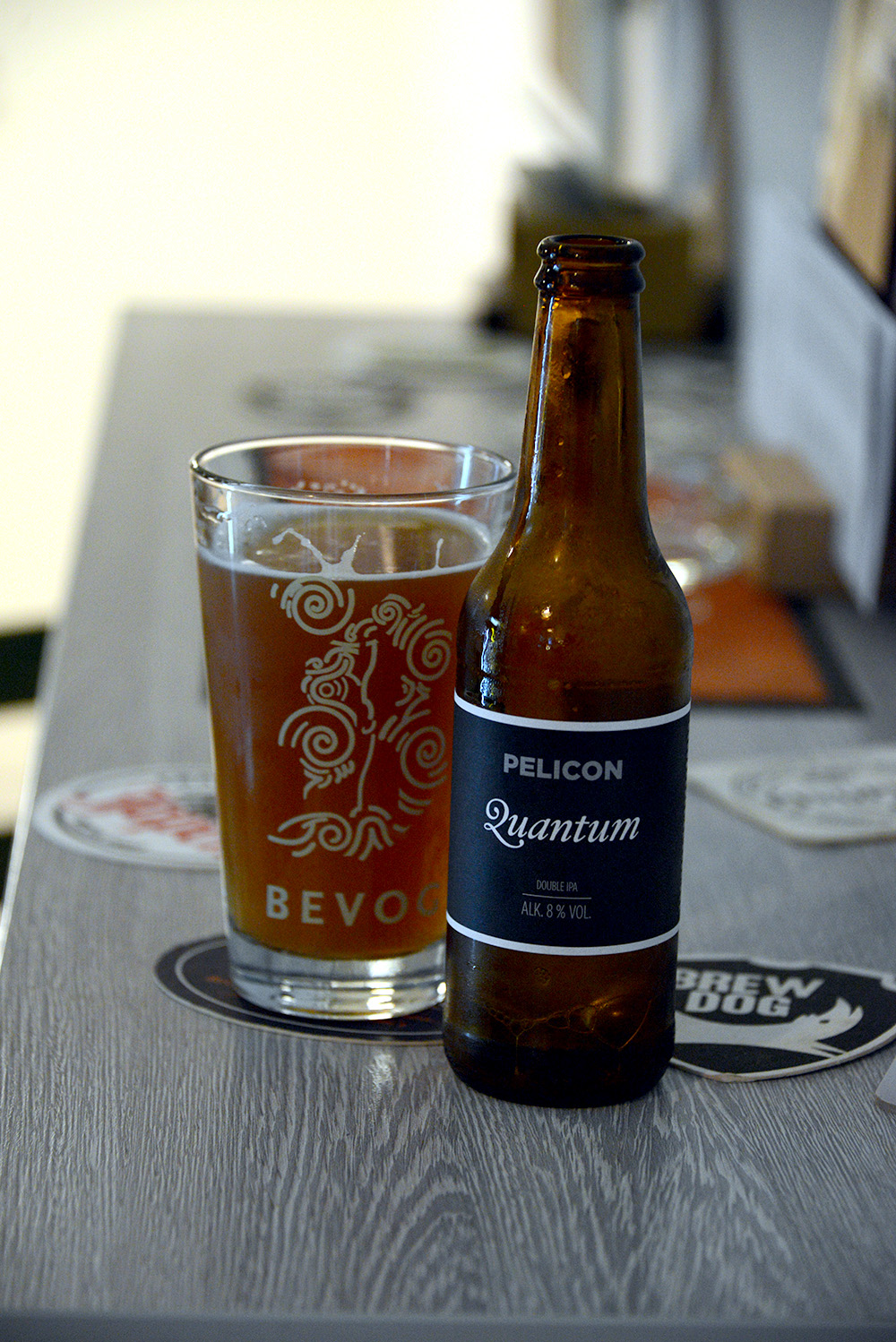
In case you find brandy too intense, there is, of course the soothing alternative of beer. Although local friends have complained of a dip in the quality of commercial beers, I would still say that Serbia is in the fortunate position of having several absolutely enjoyable domestic beers, such as Jelen and Zaječarsko, plus neighbourly imports such as Nikšićko, of which the dark version is particularly heartwarming. Several craft breweries have also popped up recently- Kabinet definitely being the best, yes, I know I am weak minded, their bottles are just wonderful and I rattled home with several of them in tow, but the content is also top notch. Our sampling was done in the cozy surroundings of Pivopija bar in Novi Beograd-  breaking news: they have a CAT- but in case you're less lazy, you can also check out the bigger version in Zemun.  Further to Kabinet, we'll also give honourable mentions to beers from the Paunović and Zebrew brewery. 

I now realize I have gone this far with only few mentions of what was supposed to be the main topic- food. I will therefore jump to the nutshell version: it's magnificent. No, really, it is. I have always thought of Serbia as the land of, well, not necessarily milk and honey, but kaymak and Eurocrem. Even their standard supermarket sweets are of the mouth watering variety, and then they go full mental and make pancakes with plazma biscuits and the aforementioned Eurocrem- which is the nec plus ultra of the socialist dream, a dual coloured concoction of hazelnut cream which tastes like all your childhood fancies packed into a square plastic box. The day the disintegration of Yugoslavia really hit home was when my grandfather told me I would have to do with the sub par Greek version of Eurocrem- and with it, childish innocence died too.

Actually, I don't even have a sweet tooth, but then I think of the tufahija (walnut stuffed apple) in Znak Pitanja, and I reconsider a fair chunk of my existence.  I do however love meat, and was pretty amused to see vegan manifestos plastered all over Belgrade- much as I wish to be accepting of everything of everyone, there are lines you do not cross, and the connection of people from the Balkans with meat is a sacred bond. 

Ćevapi (minced meat rolls), ražnjići (meat grilled on skewers) and pljeskavica (grilled meat patty), usually accompanied by an assortment of sides dishes including ajvar (pepper relish), kaymak, urnebes (peppery cheese cream) and onions are absolute staples, and just to make it all even more tantalizingly diet friendly, a delicious flatbread going by the local name of lepinja, is also thrown in. My absolute meaty nemesis when it comes to Serbian cuisine is Karađorđeva šnicla- a breaded and fried steak filled with kaymak- tasty and invariably, huge. I once dared ask a cook whether it would be possible to make a smaller edition- with a look of pity and scorn in his eyes he told me there is no such thing as a small Karađorđeva šnicla and he stormed off to talk to people who made marginally more sense than me.

You will definitely be on the safe side of things if you try some of the above in the restaurants on Skadarska street- Tri Šešira, Dva jelena, Zlatni bokal or Ima dana. Then there is of course the oft mentioned Znak Pitanja and the exquisite option of Koliba, modestly situated at the scenic confluence of the Sava and the Danube- though here you might also wish to try the fish and the walnut cake -as already mentioned, I'm really not into sweets and that is why I spent basically my entire stay in Belgrade eating them. Like, I'm not into ice cream either, so every time I went into Moritz Eis it was by some silly accident and I was drooling like a crazed pug over their entire range only because I had nothing better to do- they are to open a store in Budapest as well, so I will have new accidents for no good reason soonish. 

That time I stumbled into a French pastry shop on Dobračina street was likewise an accident, alongside all the surreptitious visits to random bakeries (pekare) which serve burek with yogurt. As GK Chesterton said, poets have been mysteriously silent on the subject of cheese, but so have they been on the subject of yogurt, and that is just as wrong, because there is the kind of yogurt which is sour just so, and teeters on the border of being fluid, yet without falling into this trap- this kind of yogurt is rare and can be found in but a few countries in the Balkans and Belgrade happens to be in one of them.

In case some/all of the above sounds too intense, no need to despair, you can detox with smoothies and shakes in FitBar- though instead of kale and goji berries, they will still put kaymak in your omlette, because even diet food is fun in Serbia.